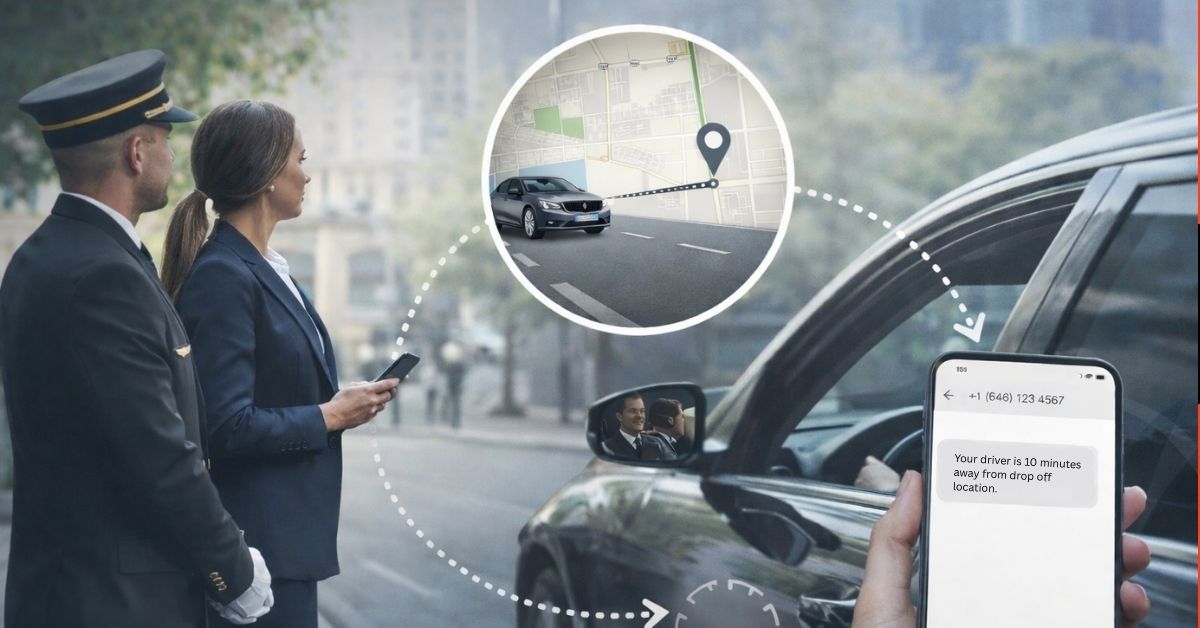
Super Bowl LX Transportation Playbook for Chauffeur Operators Serving Santa Clara, CA

Super Bowl LX takes place February 8, 2026 at Levi’s® Stadium in Santa Clara, CA. [1] If you operate a chauffeur / black car service company anywhere in the Bay Area (or you’re supporting clients traveling into Santa Clara), this is the kind of event where operations—not just vehicles—determine whether you win or lose.
This playbook is written for owners and managers who need to balance:
- compliance in a high-enforcement environment,
- realistic pickup/drop-off execution,
- scalable capacity (without taking on unnecessary risk),
- and transparent event pricing that protects margin.
Important note (not legal advice): This article is for general operational planning. Regulations and event-day access rules can change. Levi’s® Stadium management also reserves the right to change policies or procedures at any time without notice. [4] Always verify current requirements with the CPUC, the City of Santa Clara, and official Levi’s® Stadium / event guidance.
Quick takeaways for operators
- Build a two-mode plan: (A) standard published pickup zones and (B) restricted perimeter/permit operations. [2] [9]
- Expect “show me” compliance: GO 157‑E requires a waybill and requires drivers to show it upon request to Commission/airport enforcement or authorized local officials; GO 157‑E also covers airport operations authorization. [8]
- Traffic will not be “normal Sunday traffic”: Santa Clara has published phased closures beginning Jan 5, 2026. [6] [7]
- Price for time + constraints, not miles; treat access assets like inventory. [3] [9]
- If you scale with partners, do it as compliant subcontracting, not borrowed authority. [8]
Operator perspective (Dave Uziel, Owner, Urban Worldwide / A List Worldwide):
“Expect CPUC enforcement, airport enforcement, and potentially local PD perimeter controls—waybills, authority, and airport access are the first asks. Don’t count on consistent enforcement patterns from past events.” [11]
What we know now (and what can change closer to game day)
Known now: Levi’s standard rideshare / guest pickup & drop-off
Levi’s® Stadium currently publishes these locations for rideshare and guest pickup/drop-off: [2]
- Rideshare drop-off: along the bus stop south of Great America Parkway. [2]
- Rideshare pick-up: Red Lot 7. [2]
- Guest pickup/drop-off (non-mobility assistance): same as rideshare zones. [2]
- Accessible drop-off: near Patrick Henry Dr & Great America Pkwy at 2926 Patrick Henry Drive, with staff/signage directing the final approach. [2]
- Accessible pick-up: Red Lot 7. [2]
Levi’s also states that additional pickup/drop-off locations (if any) will be provided as part of the information distributed to event attendees. [2]
Operator translation: expect change, and plan communications + meet points accordingly.
A major operational reality: Super Bowl-style restrictions are possible
A useful local precedent is Super Bowl 50 (2016) at Levi’s® Stadium. That official guide placed Uber pickup/drop-off at Red Lot 7 and stated that black cars/limos should purchase a parking permit per fare because there was no designated black car/limo pickup or drop-off area; it also stated there was no designated drop-off if a ride didn’t have a ticket or parking permit. [9]
Super Bowl 50 is a historical reference only. Super Bowl LX rules may differ materially. [9]
Build your ops plan around two modes so you aren’t forced to reinvent your pickup strategy 48 hours before kickoff.

California TCP compliance refresher (the parts that matter most during Super Bowl week)
If you operate as a California Charter-Party Carrier (TCP), Super Bowl week is not when you want to “hope your paperwork is fine.”
1) Prearranged transportation only
GO 157‑E says charter-party carriers shall provide transportation only on a prearranged basis. [8]
Operational takeaway: no curbside solicitations, no “just hop in,” and no improvised trip changes that create documentation gaps.
2) Waybills are non-negotiable (and can be electronic)
GO 157‑E requires the driver to possess a waybill with specific details (carrier/TCP number, vehicle plate, driver name, who arranged the charter, time/date arranged, origination/destination, etc.). [8]
GO 157‑E also allows waybills (and other required documents) in electronic or hardcopy format and requires the driver to show the waybill upon request to Commission/airport enforcement or authorized local officials. [8]
3) Airports require airport authorization too
GO 157‑E states: no carrier shall conduct any operations on the property of or into any airport unless authorized by both the Commission and the airport authority involved. [8]
Operational takeaway: Super Bowl demand often means more airport moves—confirm your airport permissions before you accept the work.
4) Outsourcing is allowed—but only with properly-authorized subcarriers and written documentation
GO 157‑E allows use of a sub-carrier providing the vehicle/driver only if the second carrier holds Commission authority, and the arrangement must be evidenced by a written document with carriers’ names, TCP numbers, and services to be provided. [8]
5) Don’t let anyone “borrow” authority—GO 157‑E explicitly prohibits it
GO 157‑E: a carrier shall not knowingly permit its operating authority or TCP number(s) to be used by others. [8]
Big-event translation: solve overflow with compliant subcontracting—not “paper shortcuts.”
6) Advertising reminder (often overlooked)
GO 157‑E requires carriers to state their certificate/permit number in every written or oral advertisement/holding out to the public (including the “TCP” prefix and appropriate suffix). [8]
7) TCPs are not taxis
GO 157‑E states TCP authority does not authorize taxicab service and prohibits taxi meters and top lights. [8]
Pickup & drop-off strategy: plan for two operating modes

Mode A: Stadium uses standard published zones
If Super Bowl LX uses Levi’s® standard published zones, anchor your operation to: [2]
- Drop-off: bus stop south of Great America Parkway.
- Pick-up: Red Lot 7.
- Accessible: drop at 2926 Patrick Henry Drive; pick-up at Red Lot 7.
Mode A operator tips
- Train dispatch to sell a “walk-first pickup” mindset post-game. The pickup zone may require walking by design.
- Use driver scripting: “We can only pick up at the official zone—stadium staff and law enforcement control access.”
- Build your schedule assuming the last mile can be the entire trip.
Mode B: Restricted access / perimeter controls (Super Bowl-style)
Super Bowl 50 guidance at Levi’s® included: no designated black car/limo pickup/drop-off area, and black cars/limos were advised to have a parking permit for each fare; it also stated there was no designated drop-off if the ride didn’t have a ticket or parking permit. [9]
Again: historical reference only—Super Bowl LX may differ materially.
Mode B operator tips
- Sell service with a written access plan:
- “We will stage at an offsite location and coordinate pickup by phone/SMS.”
- Build two meetup points per trip:
- a “primary” aligned with official attendee guidance, and
- a “backup” farther out if the perimeter tightens.
- Expect longer waits and repositioning—price it in.
Copy/paste client comms template (feel free to use this as a starting point)
Use this as a starting point (edit the bracketed fields):
Subject: Your Super Bowl LX pickup plan (please read)

Thanks for booking with [Company Name]. Super Bowl week is a controlled-access environment around Levi’s® Stadium.

For your trip, we will confirm two meetup points: a primary location aligned with published venue guidance and a backup location farther out in case the perimeter tightens.

Day-of changes can happen due to road closures, traffic control, or security operations. If we need to change the meetup point, we’ll send one clear message with: the updated location, a map pin, and what to look for.
Please keep your phone on and watch for texts/calls from your chauffeur/dispatch at [Dispatch Number].

Waiting time begins [X] minutes after the scheduled pickup time (post-event pickups often involve walking to the designated zone).

If you have questions on game day, contact dispatch at [Dispatch Number]. We appreciate your flexibility—our goal is to deliver a safe, compliant, and on-time experience.
Do you need a special license or pass?
Two different “permissions” get confused during major events:
1) Regulatory authority (CPUC TCP rules) — required to operate legally
California TCP operations are governed by CPUC rules like GO 157‑E (prearranged service, waybills, subcontracting rules, etc.). [8]
2) Event-day access (permits, credentials, designated routes) — may be required to operate close
Levi’s® Stadium notes that parking pass prices may differ by event, and that credit card lots may be limited and cost more than pre-paid passes. [3]
Historical precedent for Super Bowl 50 suggests permit/parking assets may be required for certain black car/limo operations close to the stadium (and there may be no dedicated limo zone). [9]
If you operate buses or RVs, Levi’s® Stadium notes those vehicles must call/email to purchase parking in advance. [10]
Operator takeaway: even if you’re 100% compliant, you may still need event-day access assets (passes, staging approvals, designated routing) to execute smoothly.
Pricing: why Super Bowl week should not be priced like a normal Sunday
Levi’s® Stadium explicitly notes that parking pass prices may differ by event and day-of “credit card lots” may be limited and cost more than pre-paid passes. [3] Those are customer-friendly examples of why Super Bowl pricing differs: your costs and constraints differ.
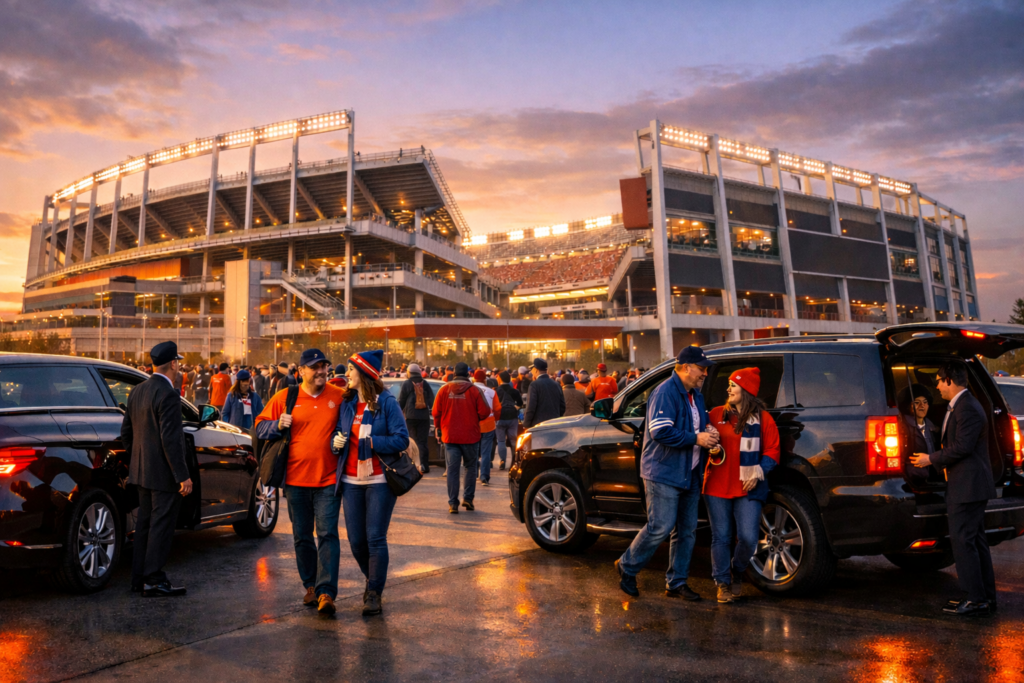
Price around cost drivers and clients will understand
Common Super Bowl cost drivers include:
- driver time (gridlock, staging, post-game waiting),
- deadhead/reposition loops,
- access constraints (passes, perimeter rules),
- opportunity cost (capacity reserved for game moves).
Recommended pricing structure (operator-friendly)
Consider:
- a Super Bowl event surcharge (flat or %),
- a minimum hour block (e.g., 4–6 hours),
- wait time that begins automatically after a grace window,
- stricter cancellation windows and/or a non-refundable deposit,
- separate SKUs for:
- drop-off only,
- pick-up only,
- round-trip with staging/offsite standby.
Pro tip: Treat permits/passes like inventory, not an afterthought.
Scaling capacity: “importing cars and drivers” the safe way
Super Bowl demand often causes out-of-area operators to look for Bay Area trips. You can scale safely, but the method matters.
Quick terminology note (California nuance)
Operators often say “affiliate” to mean a partner operator. In GO 157‑E terms, that partner becomes a sub-carrier when they provide the vehicle/driver under a written agreement and hold their own authority. [8]
Option 1: Use properly-authorized partners/sub-carriers (recommended)
GO 157‑E allows subcontracting only when the second carrier is properly authorized and the relationship is documented in writing with required identifiers. [8]
Avoid the #1 big-event compliance trap: “borrowing” authority
GO 157‑E is explicit: a carrier shall not knowingly permit its operating authority or TCP number(s) to be used by others. [8]
Traffic intelligence: don’t guess—subscribe and monitor
For Super Bowl week, assume last-mile routes will change. Levi’s® Stadium notes that any additional pickup/drop-off locations (if any) will be included in information distributed to event attendees, so be ready to adjust. [2]
Also remember: Levi’s® Stadium management reserves the right to change policies/procedures without notice.
New for Super Bowl LX: Santa Clara phased closures starting January 5, 2026
The City of Santa Clara has published phased road closures and transportation impacts around Levi’s® Stadium beginning January 5, 2026, and notes plans are subject to change. [6] [7]
Phased closures (summary):
- Phase 1 (Jan 5 – Feb 22): Stars and Stripes Drive closed to public traffic (including the ramp from Tasman Drive and the bike path along the corridor). Shuttles, parking, and rideshare pickup/drop-off associated with the Great America Rail Station will be relocated to the east (Tasman East Area) for the duration of the closure.
- Phase 2 (Jan 28 – Feb 10): Tasman Drive closed to through traffic between Great America Parkway and Calle Del Sol; bike and vehicle traffic detoured; San Tomas Aquino Creek Trail closed Jan 28–Feb 10.
- Phase 3 (Feb 8): Great America Parkway closed between Bunker Hill Lane and Patrick Henry Drive; other closures include Old Ironside and Old Glory Lane.
Action steps for operators
- Subscribe to City/stadium update channels: the City notes you can subscribe via email or Nixle and advisories are issued about 24–48 hours before an event.
- Use Nixle SMS: text your ZIP Code to 888777 for alerts.
- Assign one person (or a shared inbox) to monitor daily during the closure window and push concise “what changed / what to do” updates to drivers and clients.
Super Bowl week rewards operators who treat the event like a project—not a shift. If you build a two‑mode plan (standard zones + restricted perimeter), tighten your GO 157‑E basics (prearranged trips, waybills, airport permissions), lock compliant partner capacity early, and set crystal-clear client expectations, you’ll protect both margins and reputation when everything around the stadium gets unpredictable.
A simple operator timeline (feel free to copy/paste into your internal runbook)
6–8 weeks out
- Publish Super Bowl week rate cards + minimums.
- Review the City’s Phase 1–3 closure plan and build routing/staging plans around it (including backups).
- Lock partner capacity and confirm compliant sub-carrier documentation.
- Draft your client “pickup expectations” message (Mode A vs Mode B) + prep day-of SMS templates for meet-point changes.
2–3 weeks out
- Build a driver “stadium move” SOP:
- waybill standard (what must be on it; where it’s stored)
- communication script for drop/pick zones
- escalation plan for perimeter restrictions
- Build a “meet-point matrix”: primary + backup meeting points (and clear rules for when to switch)
7–10 days out
- Re-confirm active Phase 1 impacts and update internal map pins.
- Reconfirm VIP itineraries and “no improvising” rules for chauffeurs near controlled-access areas
72 hours out
- Pull the latest City guidance + traffic advisory channels you monitor.
- Confirm each reservation’s primary + backup meetup point and send a “final meet plan” to passengers
Game day
- Run a dispatch “war room” from ~3 hours pre-kickoff through ~2 hours post-game
- Enforce zone discipline—drivers should not improvise approaches that create enforcement or safety risk
- If meet points change due to closures/control, push one clear update: new meet point + map pin + what to look for
Sources and Citations.
[1] Levi’s® Stadium — Super Bowl LX event page
https://levisstadium.com/event/super-bowl-lx/
[2] Levi’s® Stadium — Rideshare and Pick-Up/Drop-Off
https://levisstadium.com/plan-your-visit/pickup-dropoff/
[3] Levi’s® Stadium — Parking (event pricing note)
https://levisstadium.com/plan-your-visit/parking/
[4] Levi’s® Stadium — Stadium A–Z Guide
https://levisstadium.com/stadium-az-guide/
[5] City of Santa Clara — Levi’s Stadium (alerts + eNotify/Nixle)
https://www.santaclaraca.gov/our-city/santa-clara-stadium-authority/experience-levi-s-stadium
[6] City of Santa Clara — City News: “Super Bowl LX Road Closures and Transportation Impacts Starting January 5, 2026”
https://www.santaclaraca.gov/Home/Components/News/News/45513
[7] City of Santa Clara — Super Bowl LX News and Updates
https://www.santaclaraca.gov/recreation-community/events/super-bowl-lx-news-and-updates
[8] CPUC — General Order 157‑E (PDF)
https://docs.cpuc.ca.gov/PublishedDocs/Published/G000/M322/K150/322150628.pdf
[9] Levi’s® Stadium — Super Bowl 50 A–Z Gameday Guide (historical reference)
https://levisstadium.com/super-bowl-50/a-z-gameday-guide/
[10] Levi’s® Stadium — Parking FAQs (buses/RVs advance purchase line)
https://levisstadium.com/getting-here/parking-faqs/
[11] Dave Uziel, Urban Worldwide / A List Worldwide — quoted with permission (Limo Growth Facebook post + email)
Recent Posts
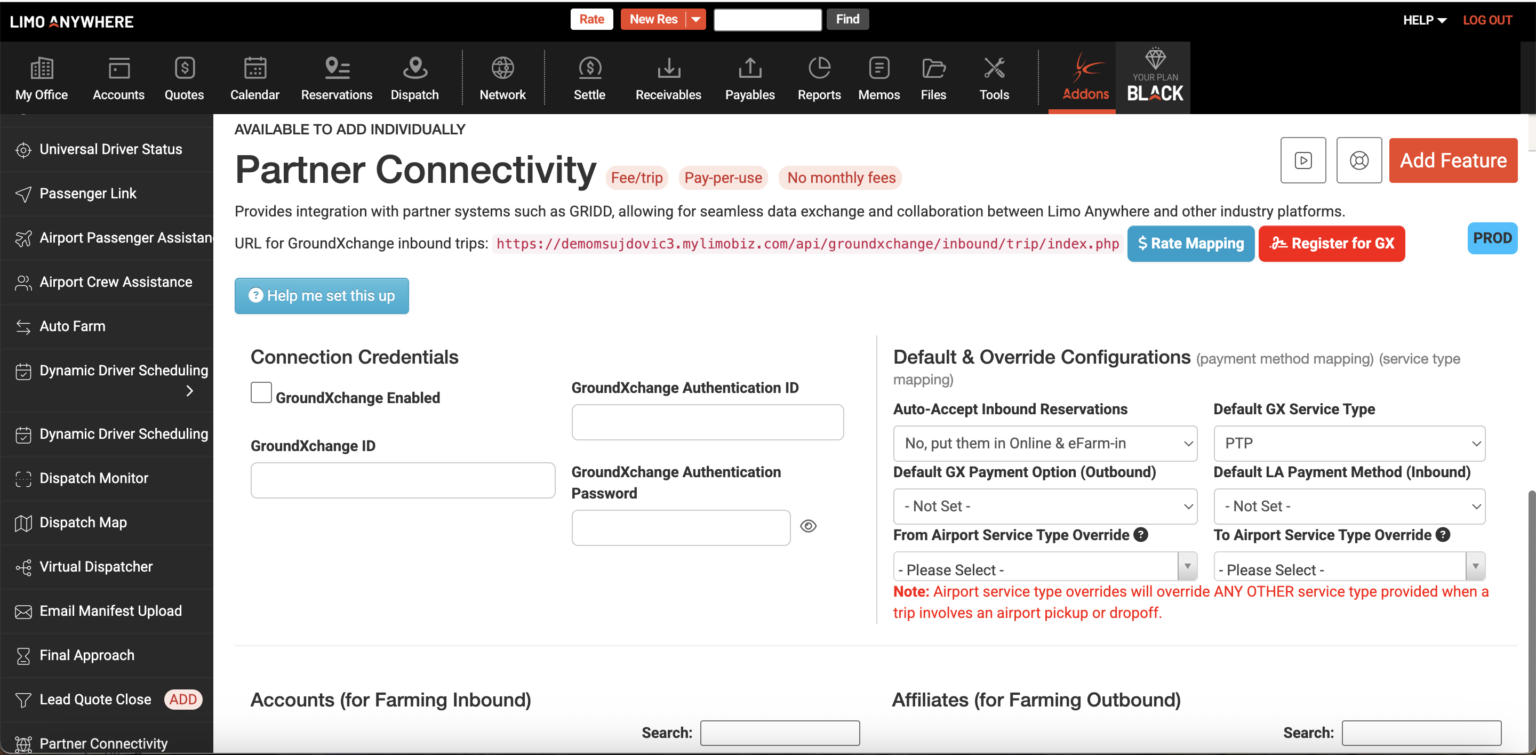
GroundXchange Self-Registration Is Now Live in Limo Anywhere
Wednesday February 18, 2026
CD/NLA Vegas 2026: Your Operator Game Plan for March 1–3 at MGM Grand
Wednesday February 18, 2026