Best Practices Series: Standardizing Capitalization, Punctuation, and Abbreviations in Limo Anywhere
As your operation grows, so does your database. More reservations. More companies. More contacts.
Without clear formatting standards, small inconsistencies can turn into duplicate records, cluttered dropdowns, and unreliable reports. The solution, simply put, is consistency.
Here’s how to set simple capitalization, punctuation, and abbreviation standards that keep your Limo Anywhere system clean and searchable.
Why Formatting Standards Matter
Limo Anywhere relies on clean data for accurate search results, filtering, and reporting. Even small inconsistencies in formatting can create unnecessary clutter and confusion, such as:
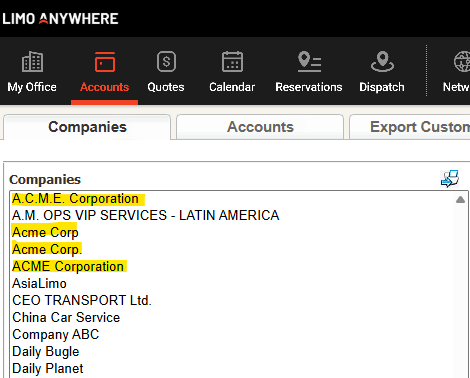
- Duplicate companies (e.g., “Acme Corp” vs. “ACME CORPORATION”)
- Duplicate versions of the same passenger, booker, or billing contact
- Confusing Service Types or Groups
- Harder-to-scan Trip Notes
- Less reliable reporting results
Establishing consistent formatting standards keeps your database organized and your system efficient.
1. Set Clear Capitalization Rules
Choose a capitalization style and apply it consistently.
Recommended: Title Case for Names and Accounts
- Acme Corporation
- Smith Wedding – 10/12/25
- Holiday Lights Tour
- John D. Smith
Avoid:
- ALL CAPS (harder to read)
- all lowercase (less professional and inconsistent)
For internal dropdown fields like Service Types, Occasions, and Groups, use the same structure every time. Clean formatting improves usability and reduces visual clutter.
2. Standardize Abbreviations
Abbreviations are one of the most common sources of duplicate entries.
For example:
- Corp vs Corporation
- Co. vs Company
- Intl vs International
- Ste vs Suite
Select one version for commonly used terms and document it. The goal isn’t which option you choose — it’s that everyone uses the same one.
This is especially important for:
- Company names
- Groups and Occasions
- Service Types
- Points of Interest
3. Simplify Punctuation Rules
Minor punctuation differences can interfere with clean searching:
- Acme Corp
- Acme Corp.
- ACME, Corp
Decide on a simple approach:
- Choose to either use or avoid periods in abbreviations, just be consistent.
- Limit unnecessary commas.
- Use dashes consistently in Service Types and Groups.
In most cases, simplicity improves readability and consistency.
4. Create Naming Structures for Key Fields
Define predictable formats for commonly used fields.
Occasions
Keep them broad and consistent:
- Rose Bowl
- Stark Expo
- World Series of Poker
- Wayne Enterprises Board Meeting
- Indy 500
- Taste of Metropolis
Avoid creating near-duplicates like “Stark Expo” and “Stark World Expo” unless reporting truly requires the distinction.
Groups
For multi-vehicle or multi-day events, use a clear structure:
[Client/Event Name] – [Date]
Examples:
- Smith Wedding – 10/12/25
- Acme Conference – Jan 2026
- Taylor Swift Concert – 06/14/26
Predictable naming makes filtering and reporting faster and more accurate.
Trip Notes
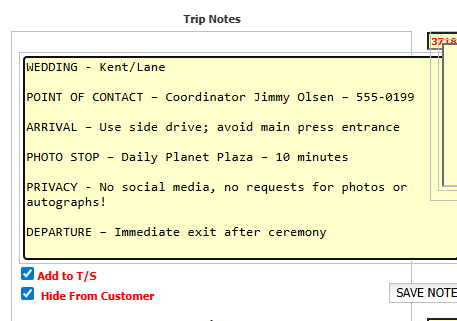
Trip Notes benefit significantly from standardized formatting. While free-text fields allow flexibility, structure improves readability and consistency.
Consider using simple header tags in all caps, followed by a dash:
- CALL ON ARRIVAL – Use side entrance to avoid paparazzi
- DOOR CODE – 4821
- MEET & GREET – Inside baggage claim
- POINT OF CONTACT – Event planner Mae Parker (123)456-7890
- CITY PARADE – See handout at chauffeur station
- VIP PREFERENCES – Address passenger as “Director Fury”; sparkling water only, chilled
This approach makes notes easier to scan quickly in reservations, manifests, and trip sheets — especially during high-volume dispatch periods.
5. Reinforce “Search Before Create”
Even with standards in place, habits matter.
Encourage your team to:
- Search thoroughly before creating a new company or contact
- Check for slight spelling or abbreviation variations
- Review existing entries before adding new ones
This one practice significantly reduces duplication.
6. Document and Share Your Standards
Create a simple internal reference guide that outlines:
- Capitalization rules
- Approved abbreviations
- Trip Notes conventions
- Occasion naming structure
- Group naming standards
Include it in onboarding materials and review it periodically with your team. Consistency improves over time when expectations are clear.
Final Thought
Formatting standards may seem minor, but in a system like Limo Anywhere, small inconsistencies compound quickly.
Clear capitalization, abbreviation, and naming rules help:
- Reduce duplicate records
- Improve reporting accuracy
- Facilitate service excellence
- Maintain a clean, professional database
Clean data supports better decisions, and a better user experience.
Recent Posts
Limo Anywhere at CD/NLA Vegas 2026: Supporting Our Community
Thursday March 5, 2026
GroundXchange Self-Registration Is Now Live in Limo Anywhere
Wednesday February 18, 2026