Your Website Is Your New Dispatcher
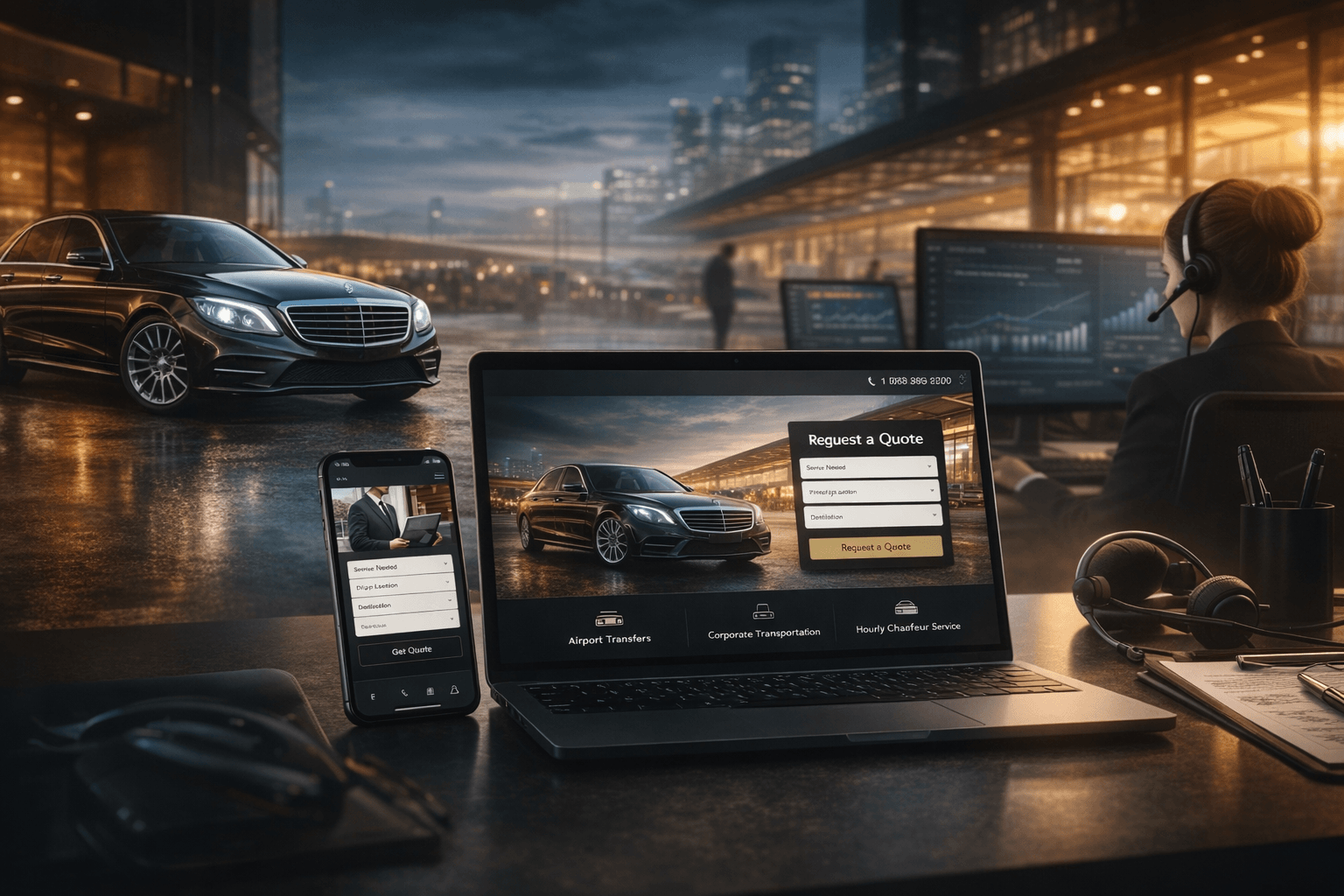
In 2026, your website isn’t a brochure. It’s not “nice to have.” Your website is your digital dispatcher. It answers calls before you do, qualifies prospects before they call, and builds trust in the seconds between “referral” and “booking.” If you rely on word-of-mouth or corporate work, your website matters even more—because referrals don’t book until they believe you’re legit.
The post-COVID reality
Customer behavior changed permanently:
- more online research
- more vendor comparison
- more expectation of instant response
- higher standards for professionalism and trust
Even corporate buyers who get referred will still check:
- your site
- your reviews
- your fleet
- your responsiveness
- whether you look “corporate ready”
The Digital Storefront Checklist
1) Make it obvious what you do (in 5 seconds)
Your homepage should instantly communicate:
- your service area
- your primary services (airport, corporate, hourly, events)
- your positioning (executive / premium / reliable)
- your primary call-to-action
If people need to “hunt,” they leave.
2) Corporate-ready service pages (not one generic page)
Create pages that match how high-value buyers think:
- Corporate Transportation
- Airport Transfers
- Roadshows / Executive Travel
- Hourly Chauffeur Service
- Events / Venues / Group Transport (if applicable)
Each page should include:
- who it’s for
- what you handle
- what makes you reliable
- a clear CTA (“Request a Quote” / “Corporate Inquiry”)
3) Conversion-first calls to action
Give prospects two fast paths:
- Call now
- Request a quote / corporate inquiry
Avoid making them:
- create accounts
- dig through menus
- submit long forms
Short forms win. You can qualify later.
4) Speed + mobile experience (non-negotiable)
Most traffic is mobile. Slow sites bleed leads.
Minimum standard:
- loads fast
- click-to-call works
- forms are easy on a phone
- text is readable without zooming
5) Trust signals everywhere
You’re selling trust more than transportation.
Add:
- reviews and testimonials
- insurance/licensing mentions (where appropriate)
- fleet photos that look premium
- years in business / safety / professionalism cues
- corporate language (“on-time performance,” “trained chauffeurs,” “account management”)
6) Track what matters (or you’re guessing)
Your site should be instrumented so you can answer:
- Which pages create calls?
- Which campaigns create forms?
- What’s the conversion rate by service?
- Where are leads dropping?
If tracking isn’t clean, you can’t optimize.
7) Follow-up systems (the hidden conversion multiplier)
Many operators lose marketing ROI because of slow response time.
Add:
- instant confirmation for form submissions
- auto-text/email acknowledgment
- internal reminders for speed-to-lead
- scripts for first response (corporate vs retail)
The fastest operator usually wins.
What a “good” website does for marketing
A strong website:
- increases conversion rate
- improves lead quality
- lowers cost per lead
- makes every campaign perform better
Marketing sends attention. Your site turns it into bookings.
Next step
Recent Posts
Your Website Is Your New Dispatcher
Tuesday March 10, 2026
Limo Anywhere at CD/NLA Vegas 2026: Supporting Our Community
Thursday March 5, 2026