Best Practices Series: Setting Your Team Up for Success
In a busy transportation operation, information moves almost as quickly as the vehicles do.
A CSR learns that a downtown event will affect several pickups. A vehicle is temporarily unavailable. A client calls to make an important change to tomorrow's reservation. The evening dispatcher handles an issue that the morning team needs to know about. Each piece of information may be small on its own, but getting it to the right person at the right time can make the difference between a smooth day and a preventable service issue.
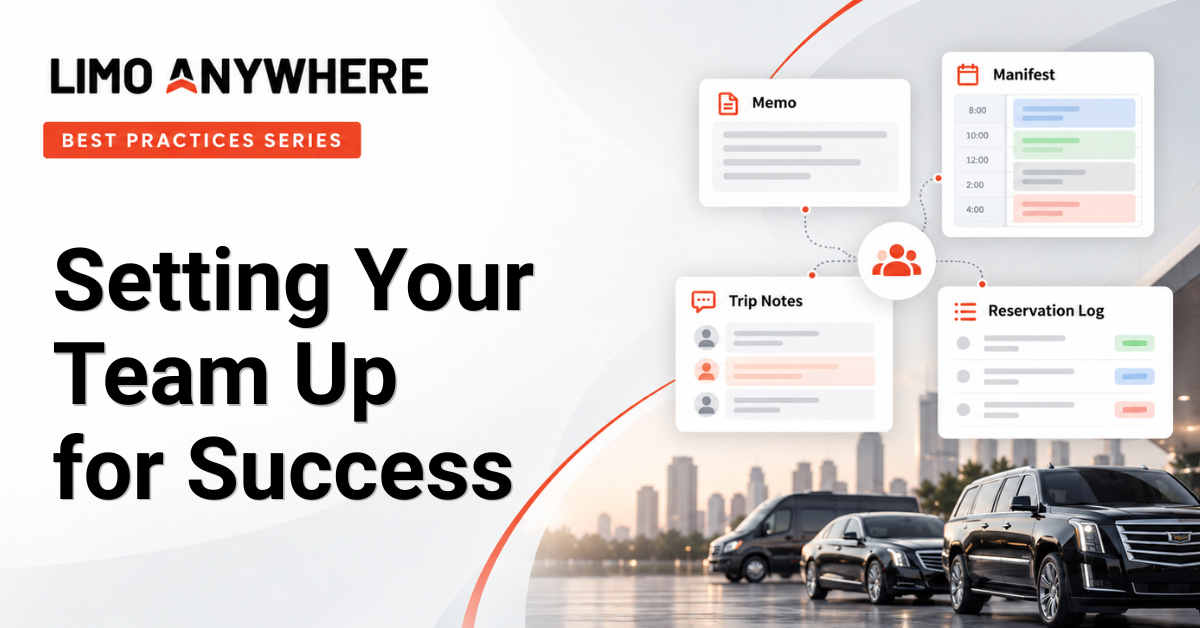
Limo Anywhere includes several tools that can help keep information moving between team members, departments, and shifts. Memos, manifests, Trip Notes, and the Res Log each serve a different purpose. Using the right tool for the right information helps give everyone a better starting point for doing their job.
1. Use Memos for Information the Team Needs to Know
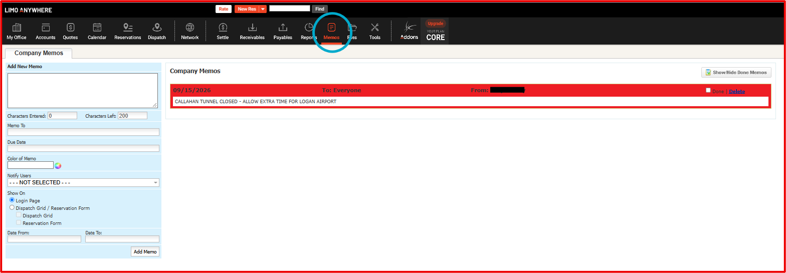
Memos are a useful way to communicate operational information that applies beyond a single reservation.
For example, a Memo might alert your team that a vehicle is temporarily unavailable, identify a major road closure or local event affecting service, share a temporary operating procedure, or call attention to another issue that CSRs and dispatchers should have on their radar.
The key is to keep Memos useful. Make the message concise, put the most important information first, and include relevant dates or timeframes when appropriate.
Just as importantly, keep them current. An outdated Memo can quickly become background noise or, worse, cause confusion after the situation has changed. Make reviewing and removing outdated information part of your routine.
Remember that a Memo communicates information, but it doesn't necessarily take the place of another action in Limo Anywhere. For example, if a vehicle is out of service, you may also need to mark it Inactive or create a Maintenance reservation, depending on the circumstances.
2. Use Manifests to Look Ahead
A manifest is more than a list of upcoming reservations. Used proactively, it can be an important planning, handoff, and operational tool.
Reviewing upcoming reservations gives your team an opportunity to identify trips that may need additional attention before vehicles and chauffeurs are assigned or the day of service arrives. Depending on your operation, that could include early-morning pickups, large groups, unusual routing, special vehicle requirements, high-touch clients, or a particularly busy period.
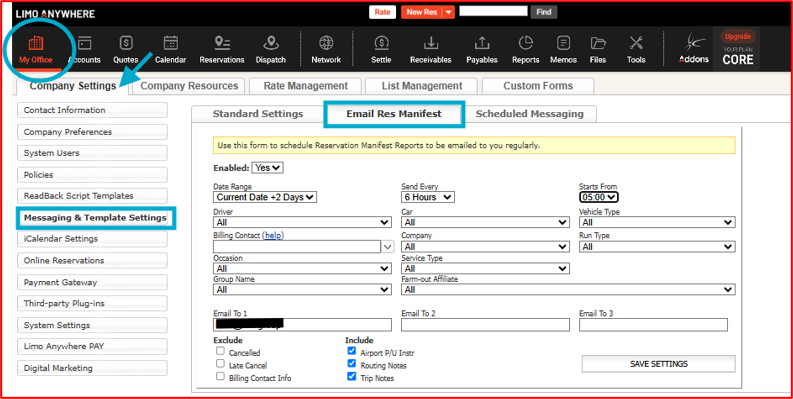
Limo Anywhere's Email Reservation Manifest can also help put that information in front of the right people automatically. Operators can configure how many days of reservations are included, how frequently the manifest is sent, and which email addresses receive it.
Think beyond your dispatch team when deciding who could benefit from a manifest. For example, your shop or fleet team may use upcoming reservation information to help schedule vehicle detailing, routine maintenance, or repairs around operational needs. Managers may want a broader view of the next several days, while an incoming dispatcher may be primarily concerned with today's or tomorrow's trips.
Regularly emailed manifests can also provide an important backup during an unexpected power or internet outage or other emergency. Having upcoming reservation information already available outside the live system can give your team a valuable reference point while normal access is interrupted.
The goal isn't simply to distribute another report. It's to put useful information in the hands of the people who need it, with enough lead time to act on it.
3. Keep Reservation-Specific Information With the Reservation
If information applies to one particular trip, the reservation itself is usually the best place for it.
Trip Notes can capture details that the next person working with the reservation needs to know. When appropriate, selecting Add to T/S allows those notes to appear on the Trip Sheet as well. Company Preferences can also be configured to show Trip Notes on Trip Sheets by default and to control whether those notes are hidden from the customer by default.
This is especially useful for information such as special pickup instructions, passenger preferences, event logistics, contact details, or other operational information that needs to follow the reservation.
Consistency helps here, too. Simple headers such as PICKUP, CONTACT, MEET & GREET, or SPECIAL INSTRUCTIONS can make longer Trip Notes much easier to scan.
The general rule is simple: put information as close as possible to where it will be needed. A detail about one reservation shouldn't have to live in someone's memory, an unrelated Memo, or a separate message thread.
4. Build a Better Shift Handoff
Shift changes are one of the easiest places for information to get lost. That's why many operations use an End of Shift (EOS) report or similar handoff process to communicate what happened during the outgoing shift and what the incoming team needs to know.
An effective EOS report doesn't need to recap every trip or action from the previous shift. Instead, it should call attention to the exceptions: unresolved issues, significant client changes, vehicle concerns, trips requiring follow-up, unusual circumstances, or anything else the next shift needs to have on its radar.
Limo Anywhere can support that handoff by providing much of the underlying detail. Depending on the role and your operation, the incoming team might:
- Review current Memos for broader operational updates.
- Scan the upcoming reservation manifest for what's ahead.
- Review any reservations or issues specifically identified in the EOS report.
- Look more closely at unusual, complex, or high-touch trips.
- Confirm that important reservation-specific information is documented in the appropriate place.
The Res Log can be particularly helpful when the EOS report points to a reservation that was changed or had an issue during the previous shift. The Reservation Log helps show changes made to the reservation, while the Dispatch Log provides a record of dispatch activity and status changes. Rather than trying to capture every detail in the EOS report, the outgoing team can flag what needs attention and allow the system record to provide additional context.
This creates a more useful handoff: the EOS report tells the next shift where to look, while Limo Anywhere helps tell the rest of the story.
A consistent handoff routine also reduces dependence on verbal communication alone. Conversations between shifts are still valuable, but when important information is documented and supported by the information in Limo Anywhere, the next team has something to reference after the outgoing shift has gone home.
5. Match the Tool to the Information
Not every update belongs everywhere. In fact, copying the same information into multiple places can create a new problem if one version is updated and another isn't.
A simple internal standard can help your team decide where information belongs:
| If you need to... | Consider using... |
| Share an operational update the broader team needs to know | Memo |
| Give the team a forward view of upcoming reservations | Reservation Manifest |
| Document details specific to one reservation | Trip Notes / Reservation Details |
| Understand what changed on a reservation | Reservation Log |
| Review dispatch activity or status changes | Dispatch Log |
| Carry appropriate trip information through to the chauffeur | Trip Sheet |
The exact process will vary from company to company. What's most important is that your team has a shared understanding of which tools you use for which types of information.
6. Keep the Signal Strong
More communication isn't always better communication.
If Memos are never removed, Trip Notes become long blocks of unstructured text, or the same information is entered in several places, important details can become harder to find.
A few simple standards can make a big difference. Decide who is responsible for keeping Memos current. Establish a consistent format for Trip Notes. Determine when manifests should be reviewed and by whom. Build system review into your shift-change process.
These habits don't need to be complicated. They simply need to be consistent.
It's also worth revisiting those processes periodically. If your team routinely asks the same question, misses the same type of information, or relies on an outside text or verbal reminder to communicate something important, take a look at whether that information could be captured more effectively within your existing Limo Anywhere workflow.
The right information is only useful if it reaches the right person at the right time.
Memos, manifests, Trip Notes, the Res Log, and Trip Sheets each play a different role in keeping your operation informed. Building simple, consistent habits around how your team uses them can improve handoffs, reduce missed details, and help employees begin each shift with the information they need.
When Limo Anywhere becomes the shared source for operational information, your team spends less time tracking down details and more time putting them to work.
Recent Posts
LA Net Update
Tuesday October 6, 2026
Managing Multiple Flights and Troubleshooting Flight-Tracking Issues in Limo Anywhere
Thursday September 24, 2026