Social Media Advertising for Limo Services: What Works, What Doesn’t & How to Measure ROI
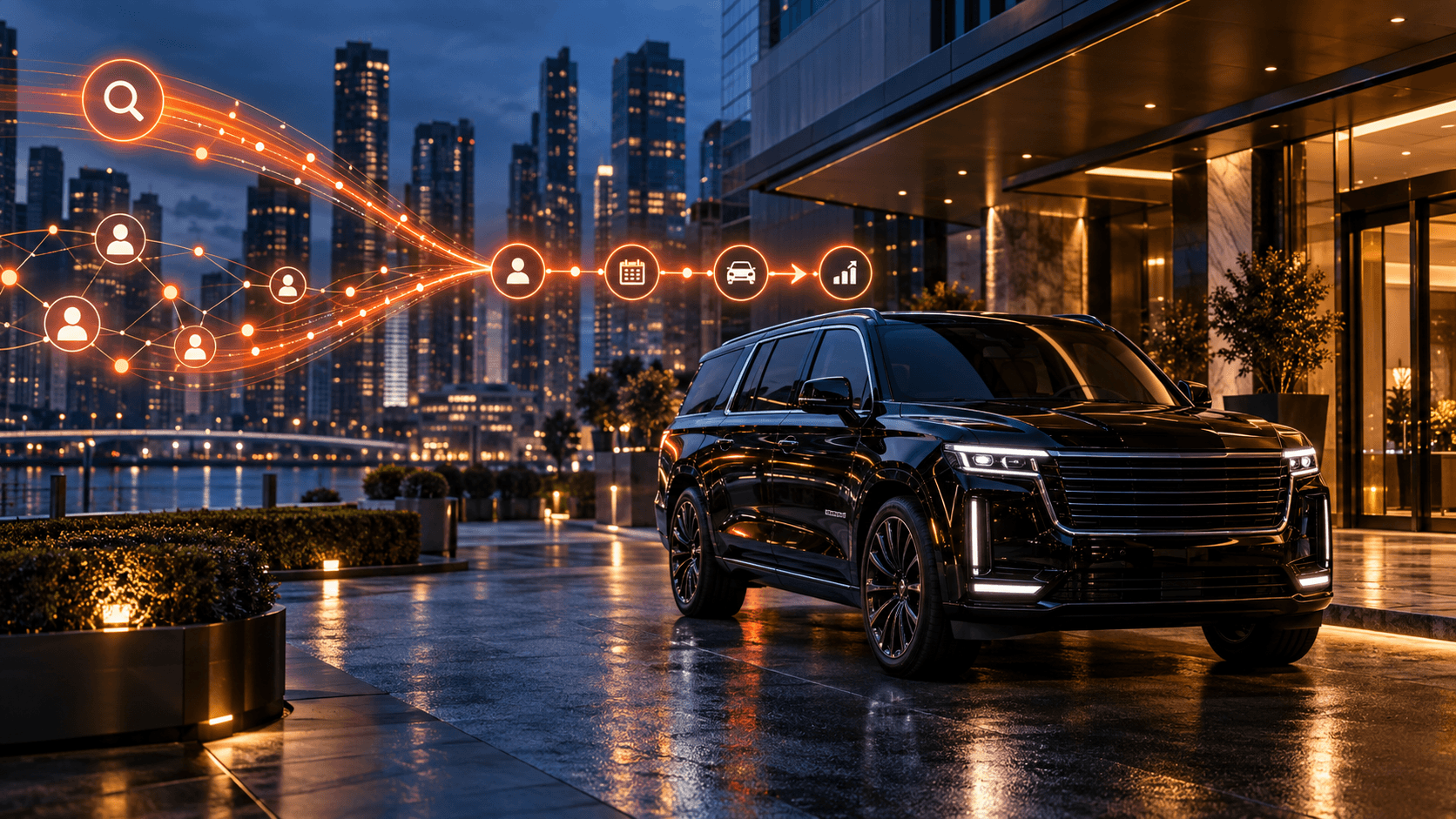
Search captures active demandPaid social creates or re-engages demand
The right advertising channel depends on the service, the buyer’s intent, and the economics of the booking. Neither channel is successful until the campaign produces qualified, completed bookings at an acquisition cost the business can support.
Social media advertising for limo services works best when it is built around one trip type, one buyer moment, and one useful next action. That distinction matters for every limo, black car, chauffeur, private car, and luxury transportation business buying attention online. A wedding inquiry generated from Instagram does not behave like an airport passenger searching Google for a ride tomorrow morning. The buyer is in a different moment, needs different proof, and should not be sent through the same conversion path.
The same operating logic applies across limo service marketing, broader limousine marketing, and lead generation: a platform report cannot tell you whether the inquiry fit the fleet, the team responded effectively, or the completed trip supported the acquisition cost.
The practical question is not “Which platform is best?” It is: Which service are we selling, what is the customer trying to accomplish, what should the ad ask them to do, and what remains after the resulting trip is completed?
The demand-to-contribution system
Seven decisions connect an ad to a business outcome
A campaign can look healthy at the platform level and still fail after the click. Follow the chain all the way through.
1ServiceWhat trip are you selling?
2IntentIs the buyer searching or discovering?
3ChannelWhere can that intent be reached?
4OfferWhy should this buyer act?
5PathCall, quote, form, or book?
6TripWas it booked and completed?
7ContributionWhat remained after variable costs?
The campaign is only one link. Weak qualification, slow response, unavailable vehicles, or poor trip economics can break the system after the ad performs its job.
Social Media Advertising vs. Google Ads: Start With Customer Intent
Paid search captures expressed demand; paid social interrupts or re-engages people who may not be actively shopping at that moment. That difference should determine the service, message, creative, landing experience, and success metric.
Channel
Buyer moment
Strong starting use
Primary business measure
Google Search
The prospect is actively searching for transportation tied to a service, location, airport, venue, or date.
Airport transfers, point-to-point rides, wedding searches, hourly service, and other clearly expressed needs.
Cost per qualified completed booking and contribution generated.
Facebook and Instagram
The prospect is scrolling, researching, planning, or responding to a visual reminder rather than actively searching.
Weddings, proms, group occasions, seasonal events, nightlife, brand proof, and service discovery.
Qualified inquiry-to-booking rate and cost per completed booking.
Retargeting
The prospect has already encountered the company, website, service page, or campaign but has not completed the desired action.
Reinforcing proof, returning a visitor to a quote or booking path, and supporting longer consideration cycles.
Assisted qualified bookings without excessive repetition or audience waste.
Google’s current documentation describes Search campaigns as a way to reach people actively searching for products and services, with keywords helping determine when ads may appear. Meta’s lead-ad documentation currently includes instant forms, website forms, messaging, and calls. Those are platform capabilities—not campaign strategy. The operator still has to decide which action fits the service and whether the operation can deliver the resulting work.
Before Buying Demand, Ask: Can We Actually Fulfill It?
Do not scale advertising until the operation can quote, schedule, and complete the work being promoted. A campaign for early-morning airport transfers is a bad campaign if chauffeur coverage begins at 6 a.m. A prom campaign is not a win if the pictured vehicle is unavailable on the requested dates. Marketing cannot rescue a capacity mismatch.
Market: Is there enough relevant demand in the geography you can serve?
Vehicle class: Does owned or affiliate capacity match the passenger, luggage, image, and trip requirements?
Chauffeur availability: Can qualified coverage be scheduled during the promoted hours and dates?
Service hours: Will calls, quotes, and trips be supported when the campaign is active?
Geographic coverage: Do pickup, drop-off, staging, tolls, and deadhead still support the economics?
Pricing: Can the company quote competitively without accepting contribution-poor work?
Conversion path: Can the buyer reach a staffed phone, accurate quote process, or working reservation flow?
The capacity ruleBefore increasing budget, verify the full chain: market → vehicle class → chauffeur availability → service hours → geographic coverage → pricing → conversion path. If one link fails, more leads usually create more leakage—not more completed trips.
Which Advertising Channel Fits Each Limo Service?
This matrix is a starting framework based on buyer intent and service characteristics. Actual channel economics depend on market, pricing, competition, response time, creative, landing experience, and operating capacity.
Service or objective
Practical starting channel
Why it may fit
Measure first
Airport transfer
Google Search
The buyer often expresses a route, airport, timing, or location need and may be relatively close to acting.
Qualified completed bookings by airport, route, vehicle, and service window.
Corporate transportation
Search, retargeting, and direct sales support
An individual ride may begin with search, but an account decision can require proof, procurement, billing capability, and follow-up.
Qualified account opportunities, first completed trips, and repeat account contribution.
Wedding transportation
Facebook/Instagram plus Search
Visual discovery and planning can create demand while search captures couples actively comparing providers, dates, and vehicle options.
Date-qualified inquiries, quote-to-booking rate, deposits, and completed wedding contribution.
Prom or school dance
Facebook/Instagram, supported by Search where demand exists
The service is visual, seasonal, date constrained, and frequently evaluated by more than one decision-maker.
Qualified leads for serviceable dates, correct vehicle classes, and acceptable group sizes.
Concert or special event
Search or paid social depending on the event and market
Some buyers actively search for event transportation; others respond when the occasion and convenience are presented together.
Completed bookings after parking, staging, waiting, and event traffic costs.
Hourly or nightlife
Paid social plus high-intent local search
Visual group experiences can generate interest, while search captures customers already looking for a vehicle or chauffeur.
Minimum-hour fit, vehicle utilization, trip timing, and contribution after repositioning.
Existing site visitors
Retargeting, when audience size and consent support it
The prospect already knows the company, so proof or a clear return path may help them continue the decision.
Assisted qualified bookings, audience frequency, and incremental value.
Do not launch one “limo service” campaign that mixes airport rides, weddings, corporate accounts, party buses, and hourly work. Those services have different buying windows, qualification questions, economics, and operational requirements. Separate them before the platform separates your budget for you.
Should You Boost a Post or Build a Paid Campaign?
Boost a post when the primary goal is reach, engagement, or social proof. Build a campaign when the business needs qualified calls, inquiries, quotes, bookings, testing, retargeting, or stronger measurement.
Boost the post when
The content itself is the asset
The organic post is already earning useful engagement.
The goal is local reach, visibility, event awareness, or social proof.
You accept simpler setup and less campaign control.
No sophisticated qualification or conversion workflow is required.
Use Ads Manager when
The business outcome matters
The goal is leads, calls, quotes, bookings, or retargeting.
Audience exclusions, placements, budgets, or creative tests matter.
Different services need different qualification paths.
Conversion tracking will influence budget decisions.
Use Google Search when
The customer is already looking
The query signals geography, service type, airport, venue, date, or immediate need.
The company can answer or respond quickly.
The landing page matches the exact service being advertised.
Search terms and completed-booking outcomes will be reviewed.
Meta currently describes boosted posts as promoted Page posts and distinguishes them from the broader campaign controls available through Ads Manager. The exact objectives and options can change, so use the business decision above rather than memorizing a platform menu.
Effective limo ads prove that the operator understands the specific trip. “Luxury transportation” is too broad to answer an airport traveler’s luggage question, a wedding planner’s timeline concern, or an executive assistant’s need for consistent account service.
Reliable pickup, vehicle fit, flight details, service area, and an easy quote or booking path.
Generic luxury imagery that does not answer route, luggage, timing, or vehicle questions.
Wedding
The actual wedding-ready vehicle, presentation details, coordination capability, and real event context.
Date availability, vehicle/package clarity, timeline confidence, and a date-specific inquiry.
Stock vehicles, unclear packages, and leads collected without the wedding date.
Prom
Correct vehicle class, group fit, professional operation, and parent-relevant reliability information.
Availability, passenger capacity, booking deadline, pickup area, and qualification details.
Showing a vehicle that is unavailable or attracting groups the fleet cannot serve.
Corporate
Professional chauffeur service, consistency, account process, billing readiness, communication, and backup coverage.
Predictable service and a clear path for assistants, travel managers, or account buyers to speak with someone.
Flashy nightlife creative and consumer discount language.
Event or nightlife
Vehicle size, group experience, pickup coordination, convenience, and realistic service boundaries.
Group fit, hourly minimums where relevant, event date, pickup area, and return-trip planning.
Misleading urgency or a price message that omits minimums, waiting, and event conditions.
Real vehicles matter because the ad creates an expectation the operation must fulfill. If the pictured stretch limousine, party bus, or executive SUV is not available for the promoted dates and market, the creative may generate attention while damaging trust at the quote stage.
Landing Page, Lead Form, Phone Call, or Online Booking?
Use the conversion path that collects enough information to qualify the trip without making a ready buyer work harder than necessary. More fields are not automatically better, and fewer fields are not automatically higher quality.
Conversion path
Where it can fit
Required operating condition
Watchout
Dedicated service page
Search and social campaigns for a specific airport, wedding, corporate, hourly, or event service.
The page matches the ad, answers service questions, proves fit, and leads clearly to the next action.
Sending every campaign to the homepage forces the prospect to reconstruct the offer.
Native lead form
Earlier-stage or visual campaigns where reducing initial friction helps collect interest.
The form captures service-defining details and a team member follows up quickly and consistently.
Easy forms can create volume without qualification. Measure what becomes a valid quote and completed trip.
Phone call
Urgent, complex, high-intent, or high-value inquiries that benefit from a conversation.
The phone is answered by someone who can qualify, quote, record the source, and move the request forward.
Do not pay to create calls during hours when nobody capable of converting them is available.
The form captures date, time, routing, passenger/luggage needs, vehicle preference, and contact details.
A quote request is not a booking. Track response time, quote status, follow-up, and outcome.
Online reservation
More standardized services where pricing, availability, trip details, and policies can be handled accurately online.
The experience works on mobile, reflects service rules, and creates a usable reservation record.
A broken price, unavailable vehicle, or confusing checkout can waste the highest-intent traffic.
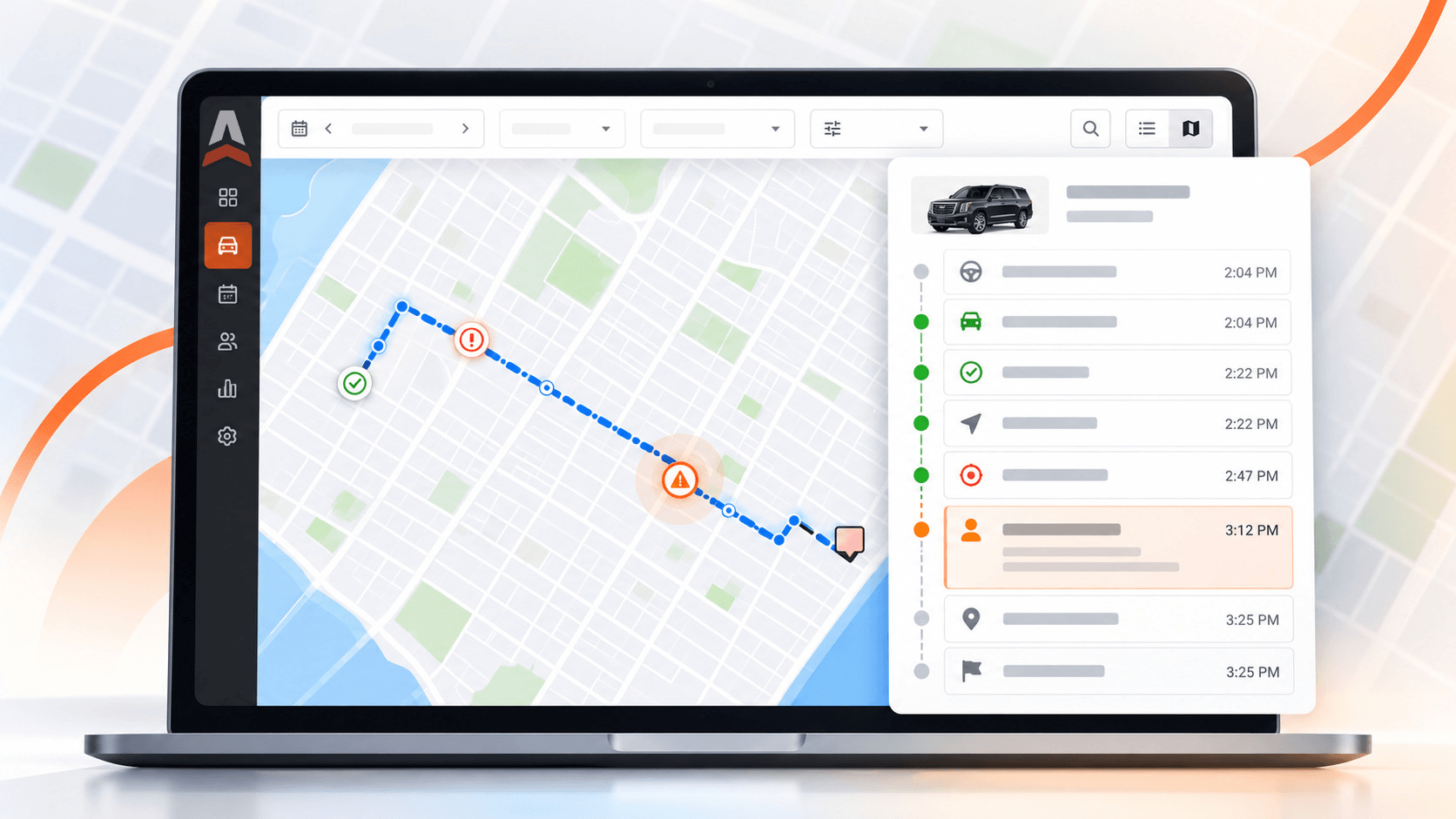
For standardized trips, online reservation software built for limo operators can let passengers check pricing, enter trip and flight information, and book from a phone or computer. More complex work may need a quote and follow-up workflow instead. The correct path follows the service—not the marketer’s preference.
Ads That Generate Limo Leads vs. Ads That Generate Bookings
A lead-generation campaign is not properly measured when reporting stops at clicks or form fills. The company needs to know whether the inquiry matched its service, received a quote, became a reservation, was completed, and produced enough contribution to support the acquisition cost.
Lead-quality funnel
Follow every paid inquiry to contribution
Each stage answers a different question. A lower count is expected; an unexplained drop is a diagnostic signal.
ClickDid the ad earn attention?
LeadDid someone inquire?
QualifiedCan and should you serve it?
QuoteWas a valid offer delivered?
BookedDid the buyer reserve?
CompletedDid the trip occur and collect?
ContributionWhat remained after trip costs?
Contribution is not company net profit. It is the amount remaining after variable trip costs to help cover fixed expenses and, after those are covered, profit.
A qualified limo lead normally includes enough information to judge serviceability: trip type, pickup and drop-off, date and time, passenger and luggage needs, vehicle fit, service area, minimums, and capacity. Qualification rules should be written before the campaign begins so the marketing report does not count every form submission as equal.
Response time belongs in this funnel. If a qualified prospect waits hours for a wedding quote or receives no answer to an airport call, the channel may appear weak even though the operational handoff failed. Track the time from inquiry to first useful response alongside lead and booking rates.
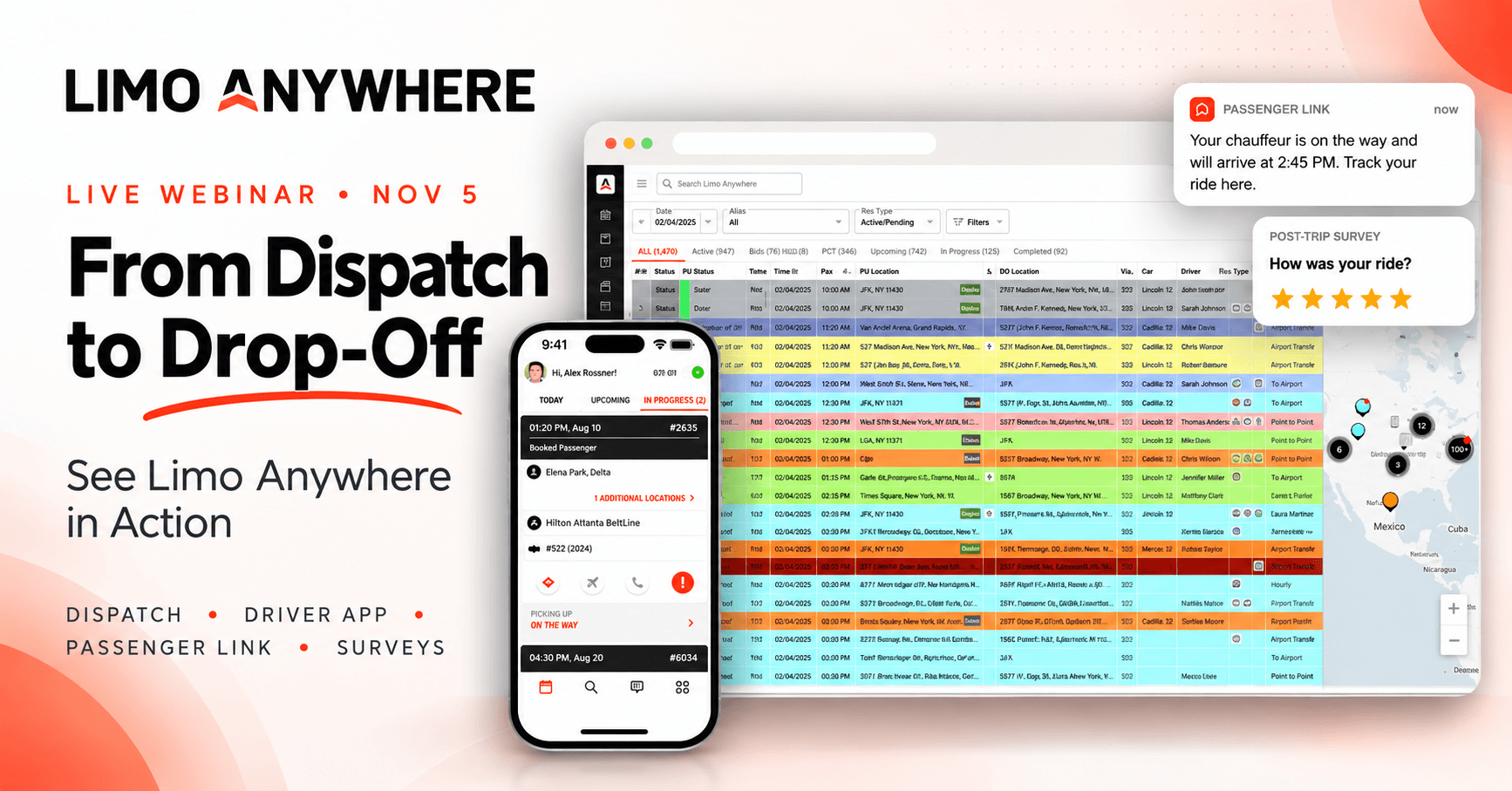
Limo Anywhere’s lead-tracking guide for transportation operators explains how source visibility, quotes, follow-up, reservations, completed rides, and reporting can connect. Exact source tracking and attribution depth depend on the tools, plan, website setup, and workflow, so confirm the required configuration rather than assuming every marketing touch will be attributed automatically.
Calculate What a Limo Lead or Booking Can Cost
Work backward from completed-trip contribution—not from an online benchmark. A universal “good CPL” cannot account for the operator’s service mix, pricing, close rate, cancellation rate, deadhead, chauffeur cost, or repeat behavior.
Cost per leadAd spend ÷ total leads
Cost per qualified leadAd spend ÷ qualified leads
Cost per booked tripAd spend ÷ attributed bookings
Cost per completed tripAd spend ÷ attributed completed trips
Variable trip costs can include chauffeur compensation, fuel or charging, tolls, parking, payment processing, affiliate or commission expense, trip-specific supplies, and other costs that rise when the ride occurs. Contribution still has to support fixed expenses such as insurance, vehicle commitments, software, facilities, administration, and management.
Work backward to an allowable lead cost
First decide the maximum acquisition cost a completed booking can support after reserving enough contribution for fixed expenses and the owner’s required return. Then apply the observed conversion rate.
Illustrative planning example—not an industry benchmark
Maximum acquisition cost per completed booking: $60
Suppose 100 raw leads produce 40 qualified leads and eight completed bookings. The raw lead-to-completed-booking rate is 8%. The qualified-lead-to-completed-booking rate is 20%.
$4.80Allowable raw CPL: $60 × 8%
$12.00Allowable cost per qualified lead: $60 × 20%
$60.00Maximum acquisition cost per completed booking
If the actual raw CPL is $9, the campaign would need a stronger lead-to-completed-booking rate, a higher allowable acquisition cost, lower media cost, or a different service mix. Cheap leads are only cheap when enough of them become economically acceptable completed trips.
Free planning tool
How many booked rides must your marketing create?
Use your ride value, contribution margin, lead cost, close rate, and marketing investment to test break-even and return scenarios before increasing spend.
Track enough information to explain where demand started, what the team did with it, and what business outcome followed. Platform dashboards are useful for campaign delivery. They are not a substitute for the reservation and trip record.
Campaign, audience or ad group, and creative
Service type and geographic market
Landing page or conversion path
Call source, form submission, message, or booking action
Lead qualification status and disqualification reason
Response time and assigned follow-up owner
Quote amount, status, and loss reason
Booked, cancelled, no-show, and completed outcome
Collected booking revenue and variable trip costs
New customer, repeat customer, or existing account
Vehicle class, chauffeur coverage, and capacity constraint
Contribution and acquisition cost by completed booking
Google Ads currently documents phone-call conversion measurement and offline conversion imports, which can help connect clicks or calls with later outcomes. Those tools still require disciplined data capture and privacy-aware implementation. A system cannot import a booking outcome that the operation never recorded.
Retargeting Should Continue a Decision—not Repeat the Same Ad
Retargeting is most useful when the prospect showed meaningful interest and the next message answers a reason they may not have acted. A visitor who viewed a wedding page may need real-event proof, vehicle availability, or a clearer inquiry path. An airport-page visitor may need route confidence, luggage fit, or an easier booking option.
Segment by service intent
Do not show nightlife creative to a visitor who researched corporate transportation. Match the return message to the page, service, or action that indicated interest.
Add new proof
Use reviews, real fleet imagery, process clarity, planning confidence, or a simpler next step. Repetition without new information is not persuasion.
Respect the booking window
A wedding, airport transfer, corporate account, and concert ride have different decision timelines. The audience duration and message should reflect the service.
Measure assisted outcomes
Retargeting may support a later search, call, quote, or direct visit. Record the source context without assuming every exposed customer was caused by the ad.
Audience creation, exclusions, consent, privacy rules, and platform requirements change. Verify current first-party documentation and applicable legal requirements before implementation. Retargeting is not automatically appropriate merely because a website receives traffic.
Three Campaign Models for Limo and Chauffeur Services
These are planning models, not promised results. Their value is in how the service, intent, conversion path, and operating constraint fit together.
Model A · Search
Airport-transfer campaign
DemandA traveler or arranger searches for a specific airport route, airport car service, or related high-intent need.
Campaign structureSeparate the airport or route theme from weddings, hourly service, and general luxury transportation. Review actual search terms rather than assuming every click represents the intended trip.
DestinationAn airport-specific page explaining coverage, vehicle and luggage fit, pickup process, flight-information handling, service hours, and the appropriate call, quote, or booking action.
Business measureQualified completed bookings and contribution after deadhead, tolls, parking, waiting, chauffeur cost, and acquisition cost.
Failure modeGeneric traffic, missed calls, inaccurate online pricing, or bookings that fall outside serviceable hours and geography.
Model B · Paid social
Wedding campaign
DemandCouples and planners may be researching visually before they search for a specific provider.
Campaign structureUse real wedding-service imagery for the vehicle actually available in the promoted market. Align the message with date availability, coordination, package fit, and planning confidence.
DestinationA wedding page or form that captures the date, locations, schedule, passenger count, vehicle preference, and contact details needed for a qualified response.
Business measureDate-qualified inquiries, quote rate, deposits or confirmed bookings, completed events, and contribution—not raw form volume.
Failure modeCheap leads with unusable dates, wrong vehicle expectations, slow quoting, or a generic form that omits the information needed to price the work.
Model C · Retargeting
Service-page return campaign
DemandA visitor viewed a meaningful service or booking page but did not complete the intended action.
Campaign structureSegment by service where practical, use a message that adds proof or removes friction, and exclude completed converters when the current platform setup and consent allow.
DestinationReturn the visitor to the relevant service, quote, or booking path rather than the homepage.
Business measureAssisted qualified bookings, incremental contribution, audience size, and repetition.
Failure modeA tiny audience, excessive frequency, the same generic creative, weak privacy implementation, or crediting the campaign for bookings that would have happened anyway.
Why Limo Ads Waste Money
Most waste appears when the campaign and the transportation operation disagree about what is being sold, where it can be delivered, or what counts as success.
Promoting every service in one campaign and sending every click to the homepage
Targeting a geography that creates unacceptable deadhead, toll, staging, or coverage risk
Showing vehicles, capacity, or service standards the operator cannot consistently provide
Paying for calls outside the hours when a qualified person can answer
Collecting leads without the date, route, group size, or vehicle information needed to qualify them
Responding slowly while prospects are comparing several transportation providers
Optimizing for clicks or raw leads without importing quote and booking outcomes
Treating booked trips as completed trips and ignoring cancellations, refunds, and no-shows
Scaling a low-margin service because its acquisition metrics look inexpensive
Changing audiences, creative, pages, and offers simultaneously, leaving no clear lesson
Declaring success before longer-cycle wedding or corporate opportunities have had time to mature
Ignoring whether dispatch, chauffeurs, fleet, and customer communication can handle more volume
A campaign can be functioning exactly as configured and still be wrong for the business. When lead quality is weak, inspect the promise, qualification and service boundaries. When qualified leads do not book, inspect response time, quote competitiveness, proof and follow-up. When bookings do not create contribution, inspect pricing, service mix and trip operations.
A Practical 30-Day Limo Advertising Test
Use the first 30 days to test one service-market system, not to prove that an entire channel works or fails forever. The purpose is to produce enough clean information to decide what should continue, change, or stop.
30-day test board
Instrument, launch, qualify, then reallocate
Do not scale attention faster than the company can understand and fulfill it.
01Days 1–7Instrumentation
Choose one service and market. Set qualification, capacity, conversion path, source capture, and booking economics.
02Days 8–14Controlled launch
Launch a focused campaign and verify traffic, calls, forms, follow-up, quotes, and reservation handoffs.
03Days 15–21Qualification review
Inspect search terms or audience signals, disqualification reasons, response time, quote rate, and capacity conflicts.
04Days 22–30Budget reallocation
Reduce identifiable waste and shift spend only toward combinations producing stronger qualified-booking economics.
“Initial data collection” is deliberately platform-neutral. Platform-specific learning systems and thresholds can change.
Days 1–7: Build the measurement and fulfillment foundation
Select one service, market, vehicle class, and customer action.
Write the lead-qualification rule and disqualification reasons.
Confirm service hours, chauffeur and vehicle capacity, pricing, and geographic boundaries.
Test the landing page, phone, form, quote, reservation, payment, and source-recording path.
Calculate the maximum acceptable acquisition cost per completed booking.
Days 8–14: Launch narrowly enough to learn
Use service-specific ads and a matching destination.
Confirm that every call, lead, quote, and reservation is entering the intended workflow.
Check search terms, audience quality, device behavior, broken links, missed calls, and form failures.
Record operational feedback: unavailable vehicles, unserviceable locations, poor time windows, and pricing objections.
Days 15–21: Diagnose the first meaningful drop
Many clicks but few leads: inspect intent, message, page match, speed, trust, and action clarity.
Many leads but few qualified leads: inspect targeting, offer, qualification fields, geography, and service boundaries.
Qualified leads but few quotes: inspect response ownership, staffing, and quoting workflow.
Quotes but few bookings: inspect response speed, price, proof, fleet fit, follow-up, and buying timeline.
Days 22–30: Reallocate using business evidence
Pause identifiable waste rather than making broad platform judgments.
Move budget toward the strongest service, message, audience/query, and conversion-path combinations.
Compare cost per qualified lead, quote, booking, and completed trip where the booking cycle permits.
For weddings and corporate opportunities, assess pipeline quality without pretending a 30-day window proves completed-trip ROI.
Document the next test so only one major variable changes at a time.
Before the next test: If you are unsure whether demand is actually the constraint, use the Limo Business Growth Grader to compare demand, conversion, and operations before adding budget.
What Works—and What Doesn’t—in Limo Advertising
What works
One service, market, promise, and conversion path per campaign system
Search for expressed demand; paid social for discovery, planning, and re-engagement
Real fleet and service proof matched to the advertised trip
Qualification rules written before launch
Fast, owned follow-up with quote and loss reasons recorded
Measurement through completed trips and contribution
Budget constrained by capacity and allowable acquisition cost
What doesn’t
Choosing a platform before choosing the service and customer
Treating engagement or raw lead volume as booking success
Sending specific ads to a generic homepage
Showing vehicles or experiences the operation cannot fulfill
Paying for calls that go unanswered
Using universal CPL benchmarks as the budget model
Scaling before the booking and dispatch workflow is ready
The strongest limo marketing system is not the one with the most channels. It is the one where the advertisement, customer promise, booking path, reservation record, dispatch reality, and trip economics agree with one another.
Transportation-specific paid media
Need help building campaigns around bookings—not clicks?
Limo Anywhere Digital Ads Services support transportation businesses with service-specific demand capture, landing-page alignment, lead and call measurement, and clearer connections between spend, bookings, and revenue.
Start with the service and buyer intent. Google Search can fit customers actively looking for an airport, wedding, hourly, or local chauffeur service. Facebook and Instagram can fit visually driven, seasonal, event, planning, and retargeting campaigns. The best channel is the one that produces qualified completed bookings at an acquisition cost the operation can support.
Do Facebook and Instagram ads work for limo companies?
They can work when the service is visually understandable, the audience and geography are relevant, the creative reflects the actual fleet, and the conversion path qualifies the trip. Weddings, proms, events, groups, nightlife, and retargeting can be reasonable starting uses. Raw lead volume alone does not establish that the ads worked.
Are Google Ads better than Facebook ads for limo services?
Neither is universally better. Google Search usually reaches people who are actively expressing a transportation need. Paid social can create awareness, shape demand, or re-engage prospects. Airport and route-specific demand may begin with Search, while weddings and events may use both discovery and search. Compare completed-booking economics by service rather than platform averages.
How much should a limo company spend on advertising?
There is no responsible universal budget. Calculate the contribution from the completed booking type being promoted, decide how much can support acquisition, apply the observed lead-to-completed-booking rate, and limit spend to demand the company can fulfill. Start with a controlled test that can produce useful evidence without creating cash-flow or capacity risk.
Should I boost Facebook posts for my limo business?
Boost posts when the goal is reach, engagement, event awareness, or extending an organic post that already resonates. Use a structured campaign when the goal is qualified leads, calls, quotes, bookings, retargeting, creative testing, or stronger conversion measurement.
What is a good cost per lead for a limo company?
A good CPL is one the booking economics can support. Work backward from the maximum acquisition cost per completed booking and multiply it by the observed lead-to-completed-booking rate. Calculate raw-lead and qualified-lead costs separately. A higher-cost lead can be more valuable when it qualifies and books at a much stronger rate.
How can a limo business get more qualified leads?
Advertise one service and service area at a time, match the message to buyer intent, show the actual vehicle and operating proof, collect trip-defining details, respond quickly, and send the prospect to the correct call, quote, or booking path. Review why inquiries are disqualified before increasing volume.
What should a limo ad include?
Include the specific service, relevant geography or occasion, real vehicle or service proof, the reason to trust the operator, and one clear next action. Where appropriate, clarify vehicle fit, passenger or luggage capacity, service hours, availability process, minimums, or the information required for an accurate quote.
How should limo advertising ROI be measured?
Connect campaign spend to qualified leads, quotes, booked trips, completed trips, collected revenue, variable trip costs, and contribution. Marketing ROI should not be calculated from clicks, calls, or form submissions alone. Contribution from campaign-attributed completed trips must first cover the campaign cost before supporting fixed expenses and profit.